A life insurance death benefit is the money an insurer pays after the insured person dies while the policy is in effect. It usually goes to the beneficiary named on the policy as a one-time payment. In Canada, most amounts received from a life insurance policy after someone dies aren’t reported or taxed as income.
The payment isn’t automatic. A beneficiary or estate representative has to contact the insurer, make a claim and provide the documents the insurer asks for. The insurer then checks the policy and confirms who should receive the money.
What is a life insurance death benefit?
The death benefit appears in the policy. If it shows $500,000, that’s the starting amount the insurer uses when reviewing the claim. What is actually payable depends on the contract and the insurer’s current policy records.
This isn’t the same as a permanent policy’s cash value. Cash value may build inside some permanent policies while the insured person is alive. The death benefit is what may be paid after the insured person’s death, subject to the contract.
Both term and permanent life insurance can provide a death benefit. Term insurance pays only if the insured person dies while the term coverage is in effect. Permanent coverage can provide a death benefit for life as long as the policy remains in effect.
For a broader overview, see how life insurance works in Canada.
How is a death benefit paid?
Every insurer has its own paperwork, but a claim usually works like this:
- Tell the insurer about the death. The beneficiary, executor or another authorized person can contact the insurance company or advisor.
- Find out what the insurer needs. The requirements depend on the policy and the circumstances.
- Send the documents. A claim form and proof of death are common. The insurer may also ask for the policy number, identification, banking information or other records.
- Wait for the claim review. The insurer confirms that the coverage was in effect and checks the beneficiary designation and submitted information.
- Receive the approved benefit. Some insurers offer electronic funds transfer or cheque; the available method depends on the claim and insurer.
Contact the insurer early and follow its instructions. A checklist can help you get organized, but the insurer will tell you exactly what it needs.
Is a death benefit paid as a lump sum?
Usually, yes. The Financial Consumer Agency of Canada describes a life insurance death benefit as a one-time payment. If the policy names more than one beneficiary, the insurer uses the shares recorded on the policy.
Not every insurer offers the same payment options, so check the claim form before choosing one.
How long does a life insurance payout take?
There isn’t one processing time for every claim. Missing information or a claim investigation can add time, so contact the insurer early, ask what is still outstanding and keep copies of what you send. A separate claims guide should cover timelines and disputes in more depth.
Who receives the death benefit?
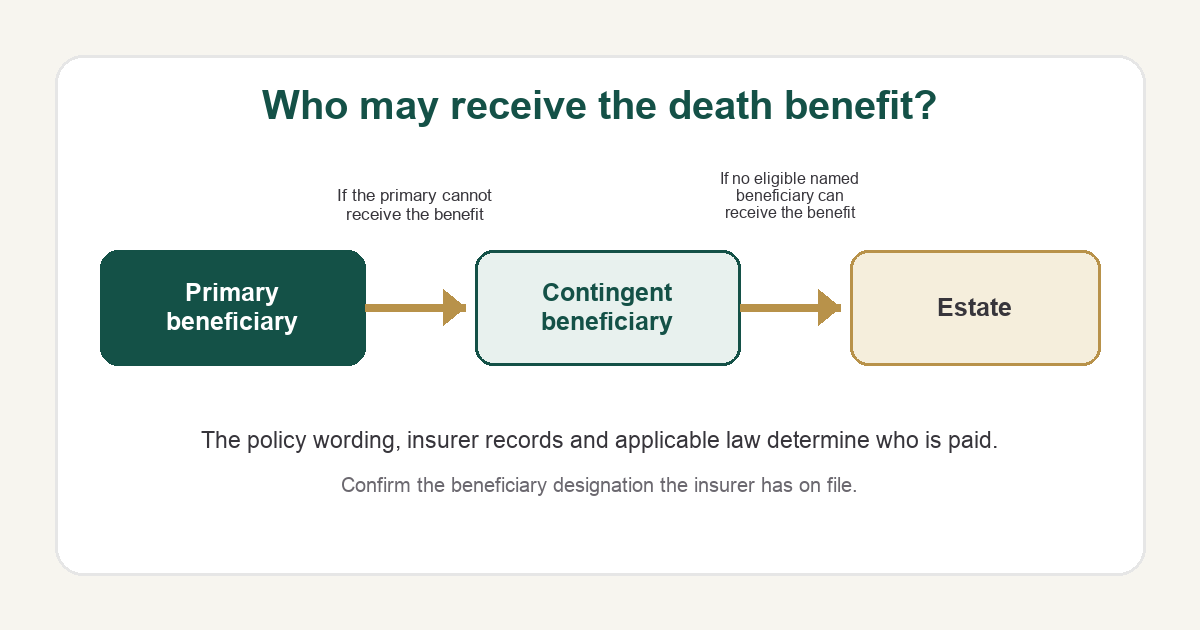
Start with the beneficiary designation the insurer has on file. The policy owner may have named one or more people, a charity, a trust or the estate. The policy and applicable law still matter.
If the primary beneficiary can’t receive the benefit, a named contingent beneficiary may be next in line. Check the insurer’s records rather than relying on an old copy of the policy or someone’s memory.
If there is no named beneficiary, the benefit will generally be payable to the estate. Once the money becomes part of the estate, creditors may be able to claim against it. Probate or estate-administration costs and any tax consequences depend on the province and the estate’s circumstances, so this isn’t well described by a blanket phrase such as “estate taxes.” Get legal or tax advice for an estate claim.
Is a life insurance death benefit taxable in Canada?
Usually, the recipient doesn’t report the life insurance proceeds as income. The Canada Revenue Agency’s exact guidance is that most amounts received from a life insurance policy following someone’s death don’t have to be reported as income.
That rule is about the insurance proceeds themselves. It doesn’t automatically answer questions about an estate, trust or corporation, and income later earned on the money can be taxable. Ask a qualified tax professional about those situations.
Don’t confuse a life insurance death benefit with the CPP or QPP death benefit or a death benefit paid by an employer. Those are different benefits with different tax rules.
What can delay or affect payment?
Having the policy document doesn’t mean the insurer can pay right away. It still has to confirm that the contract covers the claim and that the right person is asking for the money.
That review may take longer when:
- the claim form or proof of death is incomplete
- the insurer needs medical, police or other records
- the beneficiary designation or authority to act is unclear
These issues don’t automatically mean the claim will be denied. They may simply mean the insurer needs more information. Detailed timelines, investigations, denials and complaint steps belong in the separate life-insurance claims resources.
What should policy owners do now?
A few practical checks can make a future claim easier:
- confirm the death benefit and policy status
- review the primary and contingent beneficiaries
- make sure beneficiary names and shares are accurate
- tell a trusted person where the policy details are kept
- keep the insurer’s contact information with your important records
- get legal advice before naming a minor, estate or trust if the consequences are unclear
FSRA recommends telling beneficiaries or loved ones about the policy, where it’s stored and how to contact the insurer or advisor. A life insurance planning review can also help you check whether the coverage and beneficiary records still match your intentions.