Life insurance can help your family manage the mortgage, replace income, support children and keep financial plans moving if you're no longer there. The harder part is deciding how much coverage you need, how long it should last and which type actually fits your situation.

Life insurance is a contract that can pay a death benefit to the named beneficiary when the insured person dies, subject to the terms of the policy.
In Canada, life insurance death benefits are generally paid to an individual beneficiary without income tax, although ownership and estate circumstances can affect the broader planning picture.
For most families, the purpose is practical: replace some of the financial value that person would have provided over the years ahead.
If your income helps pay the mortgage, groceries, childcare, savings or everyday expenses, your family may be relying on years of future income that haven't been earned yet.
Coverage can give the people you love more financial room to make decisions after a loss.
Coverage can help reduce or eliminate major liabilities so the surviving family isn't forced to make immediate decisions about the home simply because income disappeared.
Insurance can provide capital that helps replace some of the income used for groceries, utilities, transportation, housing and everyday family life.
Childcare, activities, education and other future expenses continue even when one parent is no longer there.
Coverage may help keep savings and investment plans intact instead of requiring the family to liquidate assets just to cover current expenses.
Some families also use insurance to address final expenses, estate obligations, tax liabilities or legacy objectives.
A useful estimate starts with the obligations you want insurance to solve, then considers the resources already available to your family.
Enter your mortgage, debts, dependants and income needs to get a starting estimate.
Calculate My Coverage
Life insurance works best when it reduces financial pressure during a time when your family already has enough to deal with.
Life insurance isn't only for one type of family. The need usually begins when your death would create a financial consequence for someone else.
A shorter policy may look cheaper today. The better question is whether the financial need will still exist when that term ends.
Canadian insurers can differ in pricing, underwriting appetite, conversion privileges, policy features, product design and how they assess certain medical or lifestyle factors.
That is why the planning process should not begin by assuming one company is automatically right for everyone.
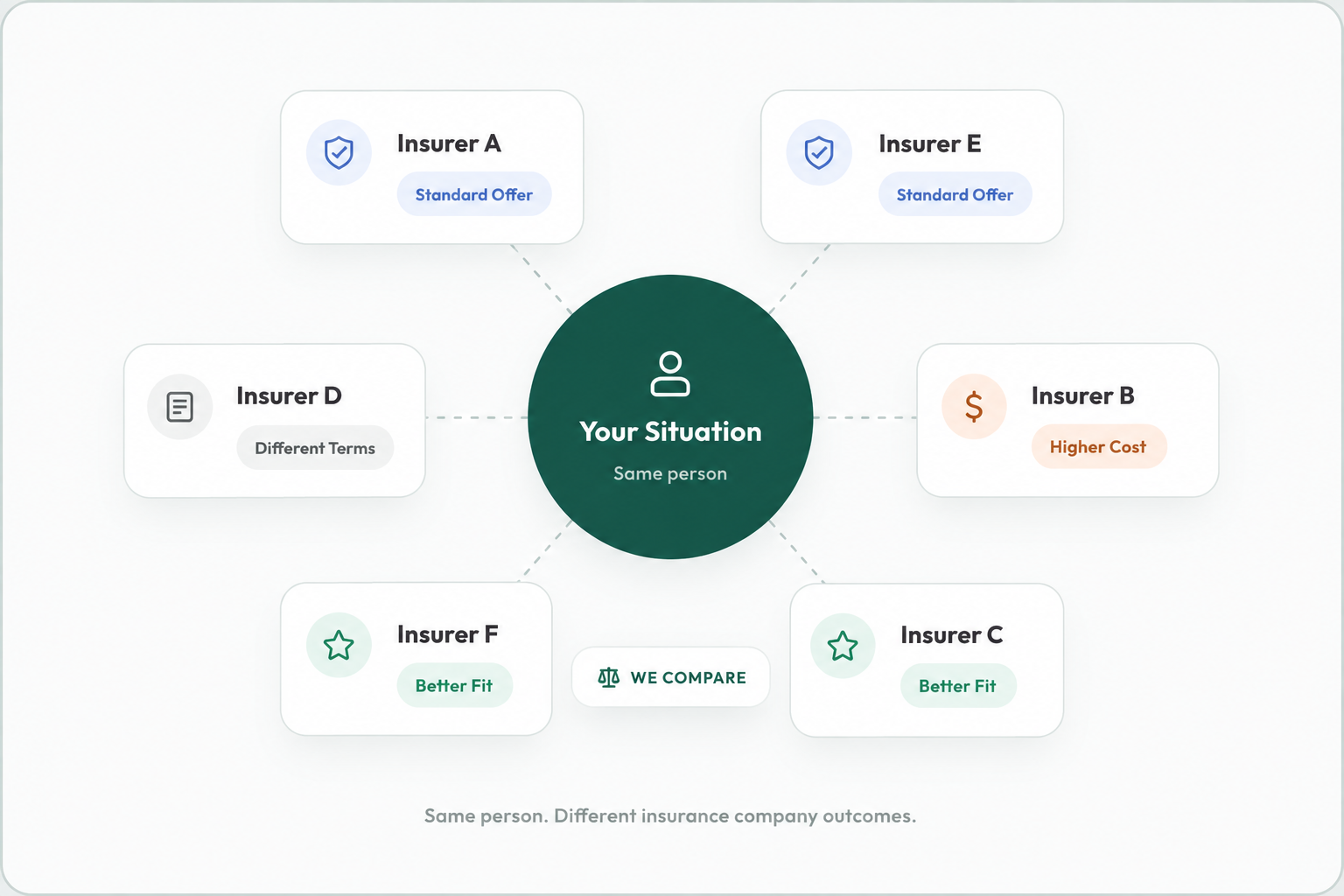

We start with your family, responsibilities and budget. Then we work into the coverage amount, timeline and policy options instead of starting with a product we already want to recommend.
Straight answers to questions that often come before choosing a policy.
Start with what's happening in your life. We'll help you work backward from the financial need into the coverage.
This page is provided for general educational purposes and does not constitute individualized insurance, financial, tax or legal advice. Coverage availability, premiums, underwriting requirements, policy features, guarantees, exclusions, conversion privileges and other terms vary by insurer, product and individual circumstances. Recommendations should be based on an appropriate review of your needs and financial situation.
